
By
Fadzlin Syazani Binti Azizi
Student, Faculty of Medicine & Health Sciences, Universiti Sains Islam Malaysia (USIM)
We have all got stress in a day – piles of work, overwhelming responsibilities, uncertainties or simply there’s a lot going on.
You may be tempted to reach out for a sugary snack as a stress relievers, but, while it gives you instant pleasure, the effect ultimately leads to a sugar crash that ruins your productivity instead.
So, what is stress-eating?

‘Stress-eating’ is a pattern of eating where people use foods to help them deal with a stressful situation. It also termed as ‘emotional eating’ where people consume huge quantities of food at one time mindlessly – usually sugary foods in response to soothe their bad feelings and stress immediately.
Cortisol – The ‘stress’ hormone
Stress can cause some people to ignore their hunger where their fight-and-flight response overrides and put eating on hold.
For other people, stress can cause hunger strikes that leads to emotional and overeating because the brain perceives stress as a threatening event which then activates the release of cortisol, commonly known as the ‘stress hormone’.
In response, the body will tend to think for a shortcut – like eating something fatty or sweet may ‘re-energize’ their body.
Sugars give ‘comfort’

Once indulged at a one time rush, the food seems to give a positive feedback effect to us where they tone down stress and emotions.
In fact, these foods really give ‘comforts’ and pleasure where dopamine (aka feel-good hormone) “hits” from eating sugar. The brain’s reward systems will be activated and thereby reinforce behaviours that demands more sugars every time we get stressed.
Then comes the sugar crash 🙁

Sugar crash is a term that refers to the sudden drop of energy levels after consuming a large amount of carbohydrates which are simple sugars like cakes, canned carbonated drinks and ice-creams.
It causes our body to experience some undesired symptoms that will derange our productivity and energy levels throughout the day such as get more hungry, experience irritability, fatigue, discomfort, anxiety, headaches and difficulty in concentrating.
Obesity and diabetes are the biggest concerns

Excessive sugar intakes daily in this unhealthy eating pattern will cause not only sugar crash in the short term, but can also cause long term health problems like obesity and diabetes.
Malaysia has the highest rate of obesity and overweight among Asian countries with 64% of male and 65% of female population being either obese and overweight. The World Health Organisation (WHO) suggests that only 25g of sugars (or 6 teaspoons) should be taken daily for an adult.
Food Pyramid Malaysia 2020
Instead of sugar rushing, the feeling of “emptiness” can actually be filled with a proper balanced meal that can lessen the effect of stress. The Health Ministry (KKM) recently introduced the ‘Food Pyramid Malaysia 2020’ that has been modified from the 2010 one to encourage better dietary habits.
Fats, oils, salts and sugars are the least that we have to include in our daily food intake and the base position of carbohydrates-food sources in the pyramid has been shifted up a level. This means that vegetables and fruits are now the base of all meals and must be taken in larger quantities.
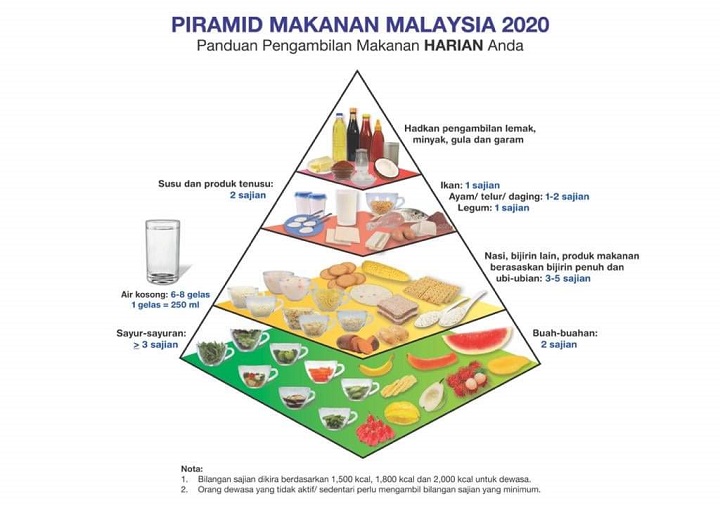
(CREDIT: Nutrition Department, Health Ministry)
READ MORE: There’s A New Food Pyramid And It Says To Eat Less Carbohydrates & Drink More Water
It’s all about balance, moderation and consistency
Don’t restrict and skip meals but plan them! Remember that sugars do not give you an immediate energy boost so have a balanced meal instead, with a dessert at the end and also a plenty of water.
When you feel overwhelmed with your day, don’t strain yourself; take a 10-minute walk, munch some healthy snacks and play with your pet!
Fadzlin Syazani Binti Azizi is a second year student at the Faculty of Medicine & Health Sciences, Universiti Sains Islam Malaysia (USIM).

If you’d like to have your opinion shared on TRP, please send it via email at editorial@therakyatpost.com with the title “OPINION:” or through social media on TRP’s Facebook, Twitter, and Instagram.


0 Comments